Getting found online can make or break your home inspection business, particularly when 28% of clicks go to the first organic search result. Traditional marketing and word-of-mouth strategies no longer deliver the consistent leads you need to grow. This leaves you with two powerful digital marketing options: SEO for long-term visibility or PPC for immediate results.
As a matter of fact, understanding which approach works best for your home inspection business requires looking at your goals, budget, and timeline. In this guide, we’ll break down how SEO and PPC work for home inspectors, including proven strategies for each approach, common mistakes to avoid, and how to determine which option delivers the best return for your business.
What home inspectors need to know about SEO and PPC
How home buyers search for inspectors online
Over 50,000 people in the U.S. search “home inspector near me” on Google every month. When they do, they see the Local 3-Pack, which displays three businesses at the top of search results. This placement matters because 44% of local searchers click on one of those three businesses shown.
The shift toward online research runs deep. In fact, 97% of consumers search online before hiring a local service provider. Most residential real estate transactions begin online, with homebuyers virtually walking through dozens of homes before meeting an agent. They apply the same process when finding a home inspector.
Search queries vary based on what buyers need. Some type general terms like “home inspection near me” or “home inspector Dallas”. Others search for specific services such as “mold inspection” or “radon testing” when they want qualified professionals. The first page of search results captures most clicks, so appearing there determines whether potential clients find you or your competitors.
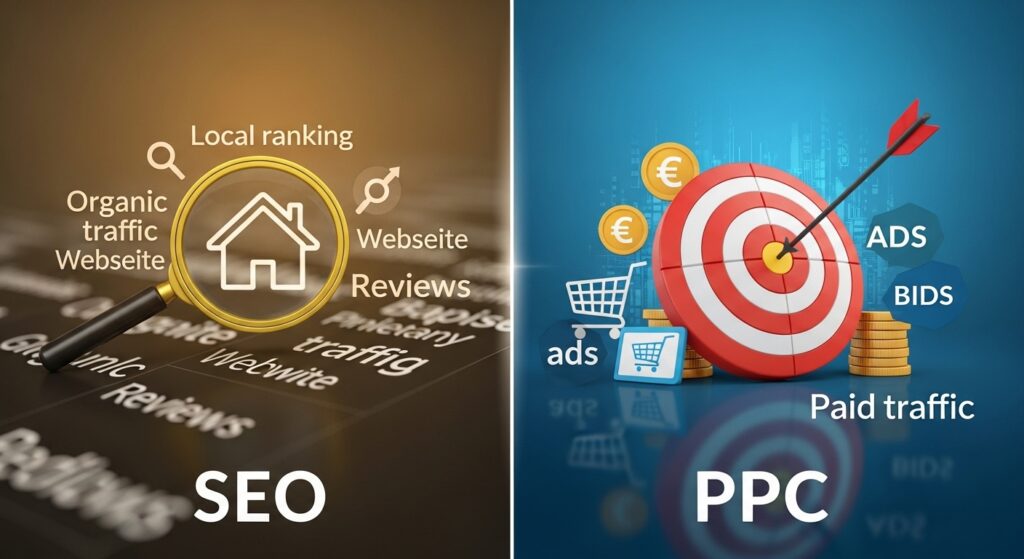
SEO vs PPC: the basics
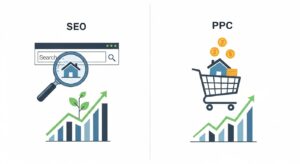
SEO focuses on improving your website’s visibility in organic search results without paying for each click. You optimize your site with relevant content, keywords, and technical improvements. The process takes three to six months to show results, but once you rank for valuable keywords, you continue attracting visitors without ongoing ad costs.
PPC works differently. You pay a fee each time someone clicks your ad. Google Ads, for instance, allows you to bid on keywords so your business appears at the top of search results immediately. You can target specific audiences by location, demographics, and search intent. The moment your campaign goes live, you start driving traffic.
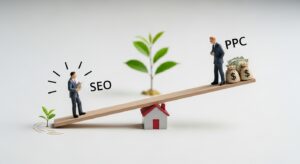
The fundamental difference lies in cost and timing. SEO for home inspectors requires long-term investment with gradual ROI, while PPC delivers immediate visibility with ongoing costs. SEO results last as long as you maintain your rankings, but PPC traffic stops when your advertising budget runs out.
Why both matter for home inspection marketing
SEO builds lasting organic traffic and establishes your authority in the market. It reduces dependency on aggregator sites that take a cut of your revenue. Most home inspection clients operate on tight deadlines, so the faster they find you and feel confident, the more likely they book.
PPC fills scheduling gaps right now. When you need immediate leads, paid ads appear only when someone actively searches for an inspector, delivering high-intent leads instead of cold audiences. You control placement, targeting, and timing with precision.
Using both strategies maximizes your search presence by appearing in paid and organic results simultaneously.
SEO strategies that work for home inspectors
Google Business Profile optimization
Your Google Business Profile acts as a 24/7 sales representative, often appearing more prominently than your website. Start by claiming your profile and completing verification. Choose accurate categories like “Home Inspector” and add secondary ones for specific services such as “Commercial Real Estate Inspector” or “Asbestos Testing Service”.
Fill out all 750 characters in your business description, incorporating terms like “home inspection” along with your city and service areas. Upload high-quality photos of your team, completed projects, and branded vehicles. Use the special hours feature to reflect seasonal changes or closures, preventing customer confusion.
Activate the messaging feature to capture inquiries during off-hours. Post weekly updates, promotions, or helpful tips to signal activity to Google’s algorithm. Track your analytics regularly to monitor views, clicks, and the keywords people use to find you.
Local landing pages for service areas
Service area pages help you rank for region-specific searches like “home inspector in Loudoun County VA” or “Maricopa County home inspection”. Create dedicated pages for each county or city you serve, including localized content, service lists, and clear calls to action.
Each page needs unique content that applies specifically to that location. Include local housing details, references to older homes or new builds common in that area, and embed your Google Business Profile map. Maintain consistent NAP information across all pages to support search engine trust.
Content marketing and blog posts
Blog posts capture long-tail searches and feed AI systems like Google SGE and ChatGPT. Write articles answering common questions such as “How long does a home inspection take?” or “What is included in a wind mitigation report?”.
Place a direct 45 to 60-word answer near the top of each post, then expand with clear subheaders. Link posts back to relevant service pages to strengthen your site architecture.
Building reviews and reputation
Reviews impact 93% of consumers’ purchasing decisions. A one-star increase in Yelp ratings generates a 5 to 9% revenue boost. Conversely, 94% of consumers avoid businesses based on negative reviews.
Send automated review requests via email or text 24 to 48 hours after inspections. Include a direct link to your Google review page to simplify the process. Respond to every review promptly, as replying results in better ratings overall.
Negative reviews require professional responses. It takes up to 40 positive reviews to undo damage from one bad review. Address complaints quickly and offer solutions when mistakes occur.
Schema markup and technical SEO
Schema markup helps search engines interpret your content accurately. Use LocalBusiness schema along with specific markup for FAQs, reviews, and services. This structured data can qualify you for rich snippets in search results.
Add schema for your business location, hours of operation, and contact information to improve local SEO efforts. Mark up every relevant element on your pages, including images, staff bios, and frequently asked questions.
PPC strategies that work for home inspectors
Google Ads campaigns for home inspectors
Google Search Ads capture people actively searching for home inspection services in your area. This represents the highest-intent audience you can reach since they’re deciding which inspector to book. Cost per click typically runs $4 to $12 in competitive markets, with cost per booking averaging $40 to $120.
Structure your campaign with focused ad groups targeting branded terms like “home inspection [city],” buyer-specific searches such as “pre-purchase home inspection,” and specialty services like “radon testing” if you offer them.
Google Local Service Ads explained
Local Service Ads appear above regular Google Ads with a “Google Screened” badge. You pay only when potential customers contact you through phone calls or messages, not per click. This pay-per-lead model reduces financial risk compared to traditional PPC.
Google requires background checks, license verification, insurance proof, and a minimum review threshold before approval. Budget $50 to $150 weekly to start.
Keyword targeting and negative keywords
Negative keywords prevent wasted spend. Block terms like “jobs,” “career,” “salary,” “training,” “DIY,” “how to,” and “checklist” to avoid people seeking employment or self-service information. Starting with over 600 negative terms protects your budget from irrelevant clicks.
Setting up effective ad campaigns
Budget recommendations vary by market: $600 to $800 monthly for cities under 100,000 population, $800 to $1,500 for metros of 100,000 to 500,000, and $1,500 to $3,000 for larger markets.
Common mistakes to avoid with SEO and PPC
DIY mistakes that waste money
Most home inspectors lose money on campaigns that ignore basic fundamentals. Poor landing pages kill conversions even when ads perform well. Failing to use location targeting wastes budget on people outside your service area. Copying content from other websites creates duplicate content penalties that tank your rankings. Missing meta descriptions, alt tags for images, and internal links diminishes post performance.
Keyword stuffing no longer works. Search engines flag abnormally high keyword usage as manipulation. Write naturally instead.
Smart campaigns and auto-apply settings
Smart Campaigns represent Google’s default option for new advertisers, but they offer imprecise targeting and minimal control. Basically, Google sells you less desirable keywords at inflated prices without providing detailed reporting.
Turn off auto-apply recommendations immediately. Go to your Recommendations tab, select All Campaigns view, click Auto-Apply Settings, and uncheck every box. Auto-applied changes have wasted thousands of dollars for advertisers who left settings enabled.
Poor keyword selection
Using broad match keywords without extensive negative keyword lists drains budgets on irrelevant searches. Keep only keywords generating 200 clicks or more. Block terms like “jobs,” “career,” “salary,” “training,” and “DIY” to prevent wasted spend.
Not tracking your results
Without conversion tracking, you’re optimizing blindly. You can’t identify which keywords drive revenue or which campaigns bring qualified leads.
Conclusion
Both SEO and PPC play vital roles in growing your home inspection business, and the question of SEO vs PPC: What Works Best for Home Inspectors? is central, though they serve different purposes. SEO builds your long-term authority and reduces dependence on paid traffic, while PPC fills your calendar immediately when you need leads now. Most successful home inspectors use both strategies together to dominate search results. Avoid the common mistakes we’ve outlined, track your results religiously, and adjust based on what your data reveals. Your choice ultimately depends on your budget, timeline, and business goals.
Frequently Asked Questions
Q1. What is the difference between SEO and PPC for home inspectors?
A. SEO focuses on improving organic search visibility over time, while PPC uses paid ads to generate immediate traffic and leads.
Q2. Is SEO a good option for home inspectors?
A. Yes, SEO helps home inspectors build long-term online visibility, attract local clients, and generate consistent enquiries without paying for every click.
Q3. Does PPC work well for home inspection businesses?
A. Yes, PPC can deliver fast results by placing your business in front of people actively searching for inspection services.
Q4. Which is more cost-effective for home inspectors, SEO or PPC?
A. SEO is often more cost-effective in the long run, while PPC can be useful for short-term lead generation and quick visibility.
Q5. How long does SEO take to show results for home inspectors?
A. SEO usually takes several months to build momentum, depending on competition, website quality, and local market conditions.
Q6. Can PPC generate leads faster than SEO?
A. Yes, PPC can generate leads almost immediately once campaigns are active and properly targeted.
Q7. Should home inspectors choose SEO or PPC first?
A. It depends on goals and budget. Businesses needing quick leads may start with PPC, while those focused on sustainable growth often begin with SEO.
Q8. Can SEO and PPC be used together for home inspectors?
A. Yes, combining both strategies can provide immediate traffic from PPC while building long-term visibility through SEO.
Q9. What factors affect success with SEO or PPC for home inspectors?
A. Success depends on local competition, website quality, targeting accuracy, ad budget, content quality, and overall marketing strategy.
Q10. What is the best long-term strategy for home inspectors?
A. A balanced approach using SEO for lasting visibility and PPC for quick opportunities often delivers the strongest overall results.