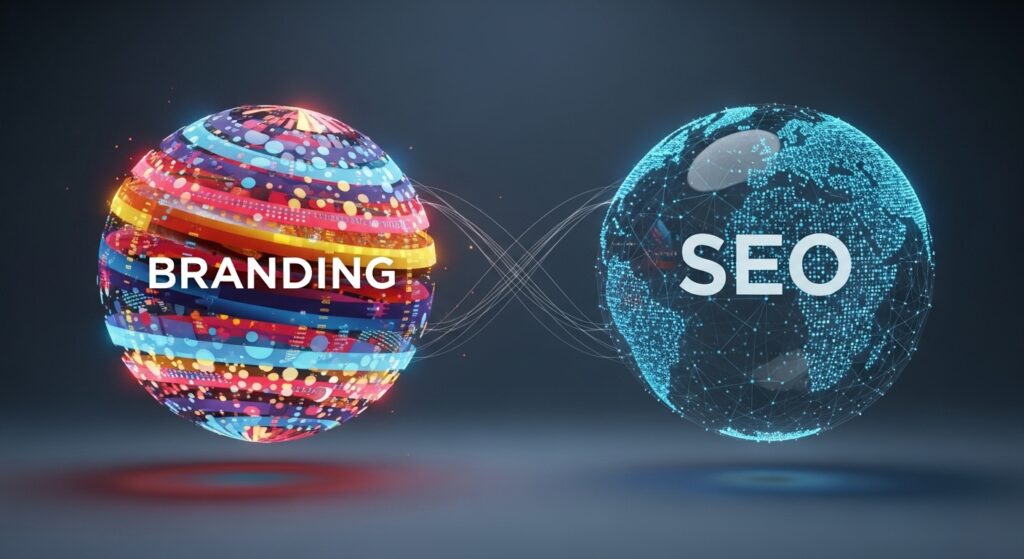
When evaluating performance based SEO services, most businesses focus on rankings and traffic, yet overlook a factor that determines whether those metrics convert: branding. It takes consumers an average of 5–8 touchpoints with a brand before they make a purchase decision. While technical optimization and keyword targeting drive visibility, branding influences the signals search engines prioritize most, such as trust, credibility, and user behavior. In fact, a strong brand earns more clicks in search results and keeps visitors engaged longer. So how important is branding for SEO? The answer lies in understanding that brand awareness drives search behavior, search impacts website traffic, and the two work together rather than in isolation. In this article, we’ll explore why branding matters for SEO performance and how to build brand strength that translates into measurable search success.
What branding means in SEO context
Beyond logos and colors
Branding isn’t just your logo. It’s the whole vibe of your business. Essentially, for those seeking Performance based SEO services, it’s a strategic process of shaping how people think and feel about your company, backed by consumer psychology that lives in the subconscious mind of your audience.
Your brand encompasses personality, values, mission, and the way you communicate across every touchpoint. Each visual element creates an experience when people interact with your business, from website design to social media posts to the fonts you choose. These elements work together to show consumers you’re professional, credible, and knowledgeable while giving your business a relatable personality.
In effect, branding is creating a dependable and trustworthy experience that shapes how your audience perceives you.
Recognition and trust signals
Search engines evaluate brands through specific trust signals. Consistent visual design, professional website presentation, clear contact information, customer testimonials, and industry certifications all communicate credibility.
The most SEO-relevant branding elements are those that shape trust and clarity: positioning (who you help and how), messaging hierarchy (what you want people to understand first), tone of voice, and a consistent visual system. When you maintain the same information, logo, and messaging from your Google Business Profile to your website to your storefront, Google recognizes you as a trustworthy business.
This matters given that 81% of consumers need to trust a brand before they’ll even consider buying. Ranking alone doesn’t build that trust. Your brand experience does.
How search engines perceive brands
Google doesn’t rank branding directly, but branding affects many ranking-adjacent signals. Search engines look at trust, credibility, and user behavior patterns. A strong brand earns more clicks in search results, keeps people on your site longer, and increases the chances they’ll return or search for your name again.
Brand signals include branded search volume (when users directly search for your company name), unlinked brand mentions, quality backlinks from reputable sites, and social engagement. These digital footprints help Google answer an important question: do people know, trust, and talk about this brand?
Correspondingly, Google’s E-E-A-T framework (Experience, Expertise, Authoritativeness, Trustworthiness) shapes how algorithms interpret these brand signals. When people recognize your name, messaging, or values, they’re more likely to click your result even if it isn’t in position #1.
Why branding impacts SEO performance
Search engines prioritize brands when determining rankings, even if they don’t explicitly label it as a ranking factor. The relationship between branding and SEO performance shows up in four measurable ways that directly affect your visibility.
Brand authority influences rankings
Google’s algorithms assess trust through E-E-A-T signals (Experience, Expertise, Authoritativeness, Trustworthiness). Strong brands naturally check these boxes. They maintain professional websites, create original content, earn customer reviews, get mentioned in media, and keep consistent business information across platforms.
Search engines model the real world, and brands dominate that space. Accordingly, Google rewards established brands with expanded listings like sitelinks, Knowledge Graph results, and duplicate rankings on page one. Modern search algorithms evaluate brands rather than just keywords, reflecting how users actually search for information.
Branded searches signal trust to Google
People search for brands they know. In fact, 45.7% of Google searches are branded. When users search for your company by name, that behavior tells Google you’re trusted and relevant.
These branded searches function as votes of confidence. A high volume of branded searches signals brand trust, improving click-through rates and organic reach. Google’s algorithm recognizes widely searched brands as authorities, creating a snowball effect where more brand searches lead to higher rankings for both branded and related generic keywords.
User behavior metrics and CTR
Google tracks user experience signals including CTR, bounce rate, session duration, and conversion rate. Strong brands consistently outperform on these metrics. Brand CTR typically ranges from 30 to 70 percent because users already recognize the company.
The impact becomes dramatic with SERP features. When sitelinks appear, the top position captures 80% CTR compared to just 45% without them. Users who recognize your brand spend more time on your site and return more frequently, signaling to Google that your content delivers value.
Backlinks follow brand credibility
Quality backlinks work as digital endorsements. When reputable websites link to your content, they vouch for your credibility. Links from respected institutions like educational sites, government pages, and established publishers confirm your legitimacy.
Moreover, Google evaluates who links to you. A few links from relevant, high-authority websites carry more weight than hundreds from random directories. This credibility by association directly enhances user perception and search rankings.
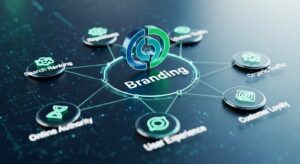
Real examples of brands winning through SEO
Established brands ranking faster
During Google’s March 2024 core algorithm update, recognizable brands suddenly dominated search results for queries they barely ranked for before. Taskrabbit’s blog post on cleaning concrete patios shot to position #1 for “what to clean cement with,” pushing down smaller sites with similar content. The BBC’s search visibility nearly trebled overnight in the UK.
Nike generates 137.1M monthly visits, while their homepage ranks for generic terms like “sneakers” and “basketball shoes” without heavy text content. The pattern repeats across industries. CarDekho pulls 32.01M monthly visitors, and Swiggy attracts 12.85M. Sites with stronger branded search demand experience greater ranking stability during algorithm updates compared to lesser-known sources. Branded keywords capture up to 60.4% CTR in the first position.
Small businesses building brand authority
Authority SEO helped BridalOnlineStore.com double revenue from $5 million to over $10 million within one year by ranking for more than 10,000 keywords. LiveLeanToday.com grew from zero to $1 million in annual revenue over four years by building brand recognition around high-margin products.
These wins came from consistent brand messaging paired with strategic keyword targeting. The results prove small businesses can build authority through focused content and local positioning.
When pure optimization isn’t enough
An HVAC business owner in Edmonton invested in SEO for three years with minimal results. Despite having 431 Google reviews and clean technical SEO, competitors with 3,000 to 5,000 reviews crushed his visibility. In highly saturated markets where established players dominated for 10+ years, starting SEO alone produces unrealistic expectations for results. Brand strength determined who won those searches.
How to build brand strength for better SEO
Create consistent brand experiences
Brand consistency means presenting standard messaging, visuals, and tone across every platform and customer interaction. Develop brand guidelines that include your logo variations, color codes (hex, RGB, CMYK), typography, voice principles, and image styles. When your business name, messaging, and visual style remain uniform across your website, social media, and local directories, search engines verify who you are. This builds brand trust and SEO value simultaneously.
Develop content that reflects brand values
Your brand strategy isn’t what you say about yourself. It’s what people remember after engaging with your content. Create content pillars around core themes that tie back to your brand’s expertise. If your blog sounds friendly but your homepage reads like legal copy, that disconnect hurts both trust and SEO. Align content goals with your broader business objectives and brand values.
Encourage branded searches naturally
Build name recognition through PR, social media engagement, customer reviews, and partnerships. When people search for your brand name instead of generic keywords, that signals trust to search engines. Encourage customers to leave reviews on Google and industry platforms. These ratings strengthen brand perception and benefit click-through rates.
Align SEO strategy with brand building
Misalignment between brand and SEO strategies creates roadblocks to growth. Conduct keyword research to determine what users actually search for in relation to your brand. Infuse SEO and optimized brand language into your marketing efforts, ensuring content ranks for valuable high-search-volume keywords. When performance based SEO services integrate brand building, organizations drive stronger recognition.
Monitor brand mentions and engagement
Google tracks brand mentions across the web, even without links. These unlinked mentions act as trust signals. Use tools like Google Alerts, Mention, or Brandwatch to monitor where your brand appears. Track mention frequency, reach, and sentiment. When you find unlinked mentions, reach out to request backlinks. Convert these mentions into marketing assets that expand visibility.
Conclusion
Branding isn’t separate from SEO anymore. The question How important is Branding for SEO? matters because the two strategies work together to build visibility that converts. When you invest in consistent brand experiences, you’re also building the trust signals, user behavior patterns, and authority metrics that search engines reward. Performance based SEO services deliver better results when paired with strong brand recognition. Start building your brand identity today, and you’ll see those efforts translate into higher rankings, better click-through rates, and sustained organic growth.
Frequently Asked Questions
1. What is branding in the context of SEO?
Branding in SEO refers to how recognizable and trustworthy your business appears online, including your brand name, reputation, visual identity, and messaging across search results.
2. Does branding directly affect search rankings?
Branding is not a direct ranking factor, but it strongly influences user behavior signals like click-through rates, dwell time, and repeat visits, which can improve rankings.
3. How does brand awareness improve SEO performance?
Strong brand awareness increases branded searches, meaning more users search specifically for your business, which signals credibility and authority to search engines.
4. What are branded keywords and why are they important?
Branded keywords include your company name or variations of it. They are important because they usually have high intent and lower competition, leading to better conversion rates.
5. Can a strong brand increase organic click-through rates?
Yes, users are more likely to click on a recognizable and trusted brand in search results, improving your organic CTR and overall SEO performance.
6. How does branding impact backlinks?
Well-known brands naturally attract more backlinks because they are seen as credible sources, which strengthens domain authority and boosts SEO.
7. Does social media branding affect SEO?
While social signals are not direct ranking factors, consistent branding on social media can drive traffic, increase visibility, and indirectly support SEO efforts.
8. How does user trust relate to branding and SEO?
A strong brand builds trust, leading to better engagement metrics such as longer session durations and lower bounce rates, which positively influence SEO.
9. Is consistent branding across platforms important for SEO?
Yes, consistency across your website, social profiles, and listings helps search engines understand your brand identity and improves credibility.
10. Can small businesses benefit from branding for SEO?
Absolutely. Even small businesses can gain a competitive advantage by building a recognizable brand, improving local SEO, and attracting loyal customers.