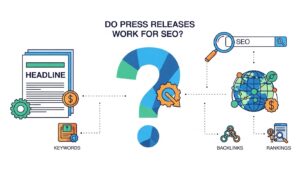
Do press releases work for SEO? This question continues to spark debate among digital marketers. When executed correctly, press releases can work exceptionally well for providing excellent online visibility and SEO for a brand, a conversation now further shaped by How AI-Generated Content Is Changing Digital Marketing Strategies. However, opinions about their effectiveness vary widely across the industry.
Press releases can benefit your SEO strategy—but only when leveraged strategically and as part of a comprehensive digital marketing approach. In fact, they often boost your brand’s presence in search results because they’re indexed across multiple sites. Despite these benefits, some experts argue that links included in press releases sent out over wire services no longer carry SEO value.
In this article, we’ll explore the real impact of press releases on search engine optimization. We’ll examine how they contribute to digital visibility, when they’re most effective, and how to integrate them into your broader marketing strategy for maximum results.

How AI-generated content works in digital marketing
In today’s digital ecosystem, AI-generated content has emerged as a powerful tool, transforming how marketers create and distribute materials across channels. Essentially, this technology is changing the rules of content production at unprecedented scale and speed.
What is AI-generated content?
AI-generated content refers to any text, images, video, or audio created using artificial intelligence technology without direct human involvement. These sophisticated systems utilize machine learning algorithms powered by natural language processing (NLP) to analyze massive datasets, raising pertinent questions such as Do Press Releases Work For SEO in this new landscape, and generate contextually relevant, coherent content. Rather than simply analyzing existing information, modern generative AI actually creates something entirely new based on patterns it has learned from training data.
The technology works by applying machine learning algorithms to analyze vast datasets of information in text form. Through millions of repetitions, AI systems become able to deduce when specific words should be used based on surrounding context. This process is often called “training AI,” where the system learns without being specifically programmed to do so.
Types of AI tools used in content creation
Several categories of AI content tools now dominate the marketing landscape:
- Conversational AI platforms like ChatGPT, Claude, and Google Gemini excel at generating text through natural conversation
- Answer engines like Perplexity combine AI generation with real-time web data for research
- Horizontal content tools like Jasper and Copy.ai focus specifically on marketing copy
- Vertical/enterprise platforms learn brand voice and audience to create customized content
The AI marketing sector is currently estimated at approximately USD 47.30 billion in 2025, demonstrating the significant investment in this technology.
How marketers are using AI today
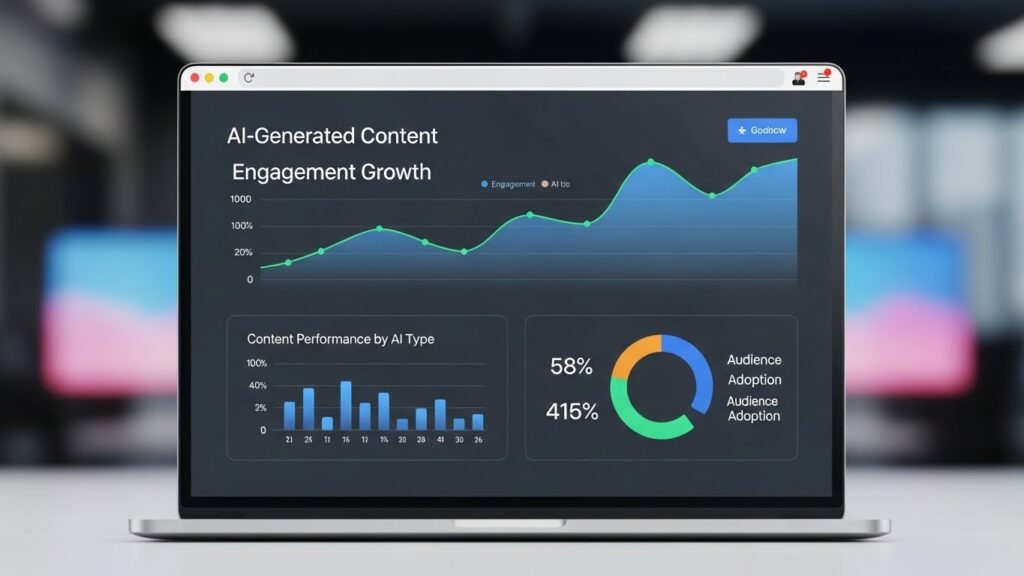
AI content generation has transformed marketing workflows, with about 88% of marketers now using AI tools daily. Furthermore, 93% report that AI helps them create content faster. Marketers primarily use these tools to:
- Generate blog posts, social media updates, and email campaigns
- Create personalized content for different audience segments
- Conduct keyword research and optimize SEO performance
- Analyze customer data for insights and targeting
At the same time, today’s forward-thinking brands are developing hybrid workflows that leverage both technological efficiency and human creativity. This balanced approach preserves creative vision while eliminating production bottlenecks.
Key benefits of using AI in content strategies
The advantages of integrating artificial intelligence into content strategies extend far beyond basic automation. Companies leveraging AI-powered marketing solutions achieve an average 37% reduction in customer acquisition costs compared to those using traditional tactics alone.
Faster content production
AI tools dramatically accelerate content creation processes, producing drafts in seconds instead of hours. Research shows that 93% of marketers report that AI helps them create content faster. For text-based content like social media posts or email copy, generation typically takes just 1-15 seconds, whereas more complex content like comprehensive blog posts might require 15-60 seconds. Additionally, AI can generate hundreds of ad variations from a single template in minutes—a task that previously required weeks of manual design work. Subsequently, this automation reduces timelines by 70-95% across most marketing formats.
Improved personalization at scale
Instead of generic “Dear [First Name]” campaigns, AI analyzes behavioral signals, demographics, and purchase intent to deliver hyper-personalized messaging at unprecedented scale. This technology enables marketers to tailor campaigns by analyzing customer behavior and preferences, delivering highly targeted experiences from product recommendations to targeted advertisements. Consequently, organizations can provide personalization at scale, reaching vast audiences with content specifically crafted for them. McKinsey reports that some marketers have deployed AI to personalize content development 50 times faster than manual approaches.
Cost efficiency for campaigns
By automating tasks that once consumed time and budget, AI enables significant cost savings. According to Deloitte, companies using AI in marketing can reduce costs by an average of 30% through automation of processes that usually require substantial human resources. Furthermore, AI-driven automation reduces content production costs by up to 70% while maintaining quality standards. Moreover, marketing teams can scale content operations without proportionally increasing budgets or team sizes.
Enhanced SEO through keyword optimization
AI significantly improves search visibility through strategic keyword implementation. AI tools can identify competitor keywords and incorporate them into content, improving Google rankings efficiently. Furthermore, AI can help marketers achieve higher conversion rates and lower costs through search engine optimization of technical components such as page titles, image tags, and URLs. Notably, AI synthesizes key SEO tokens, supports specialists in SEO digital content creation, and distributes targeted content to customers.

Challenges and limitations of AI-generated content
While AI brings remarkable capabilities to marketing, it comes with substantial limitations that marketers must address. Behind the impressive productivity gains lie several critical concerns that can impact campaign effectiveness.
Quality and originality concerns
Despite technological advances, AI content often lacks originality and depth. Reports indicate 59% of surveyed individuals trust online content less than before, with 78% finding it increasingly difficult to distinguish between human and AI-written content. Many AI outputs exhibit what experts call “AI slop” generic, recycled phrasing without genuine substance. Furthermore, algorithmic bias remains problematic, as AI models trained on biased data inevitably reinforce existing stereotypes.
Risk of misinformation
Perhaps most concerning is AI’s tendency toward “hallucinations” generating plausible but entirely fabricated information. This phenomenon occurs because AI prioritizes producing fluent language over factual accuracy. In one notable legal case, an attorney using ChatGPT submitted nonexistent legal citations that the AI completely fabricated.
Over-reliance on automation
Excessive dependence on AI tools threatens to erode critical thinking skills. As marketing teams offload cognitive tasks to algorithms, their ability to think independently diminishes. Indeed, over-reliance represents a primary barrier to effective implementation, with 78% of marketers reporting higher job satisfaction when AI handles only repetitive tasks.
Impact on human creativity
Ultimately, AI threatens authentic human expression in marketing. The technology can remix existing content but struggles to generate genuinely innovative ideas. Consequently, marketing loses emotional depth and connection—qualities essential for memorable campaigns.

Best practices for integrating AI into your content strategy
Successfully implementing AI tools into your marketing requires strategic integration rather than wholesale replacement of human creativity. Finding this balance enables better results while avoiding potential pitfalls.
Use AI for ideation, not full automation
AI performs best as a brainstorming partner rather than a complete content creator. Companies using AI for content planning see 47% higher organic traffic growth compared to manual approaches. By 2026, approximately 80% of creative professionals will use AI writing tools to support some stage of content development. Nevertheless, AI remains “as useful as the person putting it to work”.
Combine human editing with AI output
Human oversight remains essential for quality content. Editors verify facts, correct AI hallucinations, align text with brand voice, and ensure compliance with standards. This collaborative approach delivers superior results—a structured 30-60-10 workflow blending AI speed with human judgment. Even with highly trained systems, human editors should maintain final approval authority.
Monitor SEO performance regularly
Beyond traditional metrics, tracking AI-generated content requires analyzing user interactions with conversational interfaces. Regularly assessing performance helps identify enhancement areas to meet evolving SEO standards. Don’t forget to check Google Search Console for manual actions or algorithmic penalties.
Ensure content aligns with brand voice
Upload style guides to AI tools or manually train them on your preferences. Establish a brand voice scoring system to evaluate content against core attributes. Regular calibration sessions help maintain brand voice consistency across all content.
Avoid spammy practices that harm SEO
Google explicitly states that using AI “to generate content with the primary purpose of manipulating ranking in search results” violates spam policies. Instead, focus on creating unique, helpful content that fulfills people’s needs. Consider adding AI disclosure statements when appropriate.

Conclusion
AI-generated content has undoubtedly transformed digital marketing strategies across industries. Throughout this exploration, we’ve seen how AI tools create text, images, videos, and audio through sophisticated machine learning algorithms that analyze massive datasets. Marketers now rely on these technologies daily, with most reporting significant time savings and productivity gains.
The benefits extend far beyond simple time efficiency. Above all, AI enables personalization at unprecedented scale, allowing brands to connect with audiences through tailored messaging. Cost reductions of up to 70% make content production more accessible while maintaining quality standards. Additionally, AI’s ability to optimize keywords strategically improves search visibility without requiring extensive manual research.
Despite these advantages, certain limitations demand attention. Quality and originality concerns persist, as many AI outputs lack depth and substance. The risk of “hallucinations” – fabricated information presented as fact – remains particularly troubling. Consequently, marketers must guard against over-reliance on automation that might erode critical thinking skills or diminish authentic human creativity.
Successful integration therefore requires a balanced approach. AI works best as a collaborative tool for ideation rather than a complete replacement for human creativity. This partnership approach – where AI generates initial drafts that human editors refine – delivers superior results than either could achieve alone. Regular performance monitoring ensures content maintains effectiveness while alignment with brand voice preserves authentic connections with audiences.
The future of digital marketing will belong to those who master this human-AI partnership. Rather than fearing replacement by algorithms, forward-thinking marketers will embrace AI as an amplifier of human capabilities. Though challenges exist, the thoughtful application of AI-generated content will continue reshaping marketing strategies, helping brands connect with audiences more effectively while freeing human creativity for truly innovative work.
Frequently Asked Questions (FAQs)
1. Is Google penalizing AI-generated content, or can I safely use it in my marketing strategy?
Google has explicitly stated they don’t penalize content simply because it’s AI-generated. Their focus is on content quality, helpfulness, and whether it demonstrates experience, expertise, authoritativeness, and trustworthiness regardless of how it’s created. However, AI content that’s thin, repetitive, keyword-stuffed, or unhelpful will underperform just like poor human-written content. The safe approach is using AI as a tool within your content creation process rather than as a complete replacement for human oversight. Generate drafts with AI, then have humans add unique insights, real experiences, updated information, brand voice, and fact-checking. Many successful marketers use AI for first drafts, research synthesis, and structural outlining while humans handle strategic direction, original analysis, and quality control.
2. What types of content should I absolutely not create with AI, even with human editing?
Avoid using AI for content requiring personal experience or firsthand expertise that you don’t actually possess, such as product reviews you haven’t tested, medical advice without professional verification, or legal guidance without attorney review. Don’t use AI for sensitive crisis communications, highly technical documentation where errors could cause harm, or deeply personal brand storytelling that should reflect authentic founder voices. Customer testimonials, case studies, and personal narratives lose credibility when AI-generated even if edited. Financial advice, regulatory compliance content, and anything where accuracy is legally critical should involve subject matter experts beyond AI capabilities. The pattern here is clear—anything where authenticity, legal liability, or specialized expertise is paramount requires human creation with AI only as a minor assistive tool if used at all.
3. How much time and money does AI-generated content actually save compared to traditional content creation?
AI can reduce initial draft creation time by 60-80 percent, turning a four-hour blog post into a one-hour project including editing and refinement. For social media, email newsletters, and routine content, time savings are even more dramatic. However, the real economics depend on your workflow. If you’re replacing a 50 dollar per article freelancer with AI plus 30 minutes of your editing time, savings are minimal once you value your time. Where AI truly delivers value is scaling content volume without proportionally scaling costs—producing 10 blog posts monthly instead of three with the same budget, or creating multiple content variations for A/B testing. The hidden cost is quality risk—rushing AI content without proper human refinement often produces mediocre results that hurt more than help. Smart marketers view AI as a productivity multiplier for existing teams rather than a replacement, investing savings into higher-quality strategy, research, and distribution.
4. Can AI-generated content actually rank well in search engines, or does it lack something Google’s algorithm detects?
AI-generated content absolutely can and does rank well when it’s genuinely helpful and comprehensive. Google’s algorithms can’t reliably detect AI content, and they’ve explicitly said detection isn’t their goal. The challenge is that most AI content lacks depth, original insights, and current information because AI is trained on past data. It also tends toward generic phrasing that doesn’t stand out. Content that ranks well typically includes original research, expert quotes, real examples, updated statistics, unique perspectives, and answers to questions competitors haven’t addressed. AI struggles with these elements without human input. The winning formula is using AI to handle structure, basic explanations, and comprehensive coverage while humans inject originality, currency, and expertise. Sites ranking well with AI assistance are those treating it as a drafting tool within a larger content strategy, not as a shortcut to avoid actual marketing work.
5. How do I maintain brand voice and personality when using AI-generated content across my marketing channels?
Train AI on your existing brand content by providing style guides, sample posts, and specific voice characteristics in your prompts. Create detailed brand voice documentation describing tone, vocabulary preferences, sentence structure patterns, and what to avoid. Use the same AI tool consistently so it learns from your edits and refinements over time. More importantly, establish a human review process where someone who deeply understands your brand edits every piece before publication. Many teams create brand-specific custom GPTs or use AI tools with memory features that learn your preferences. The mistake is expecting AI to capture your voice automatically—it requires intentional training and ongoing refinement. Consider using AI more heavily for informational content where voice matters less and restricting it for brand-critical content like landing pages, about pages, and key campaign messaging where your unique voice provides competitive differentiation.