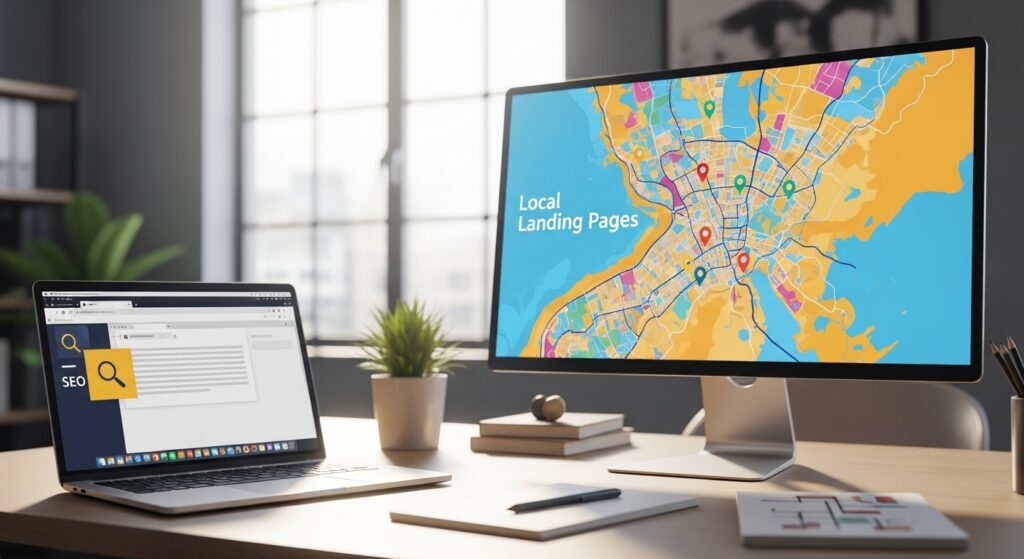
Understanding how to create content for local landing pages for SEO matters more than ever, considering that Google records 1.6 billion local searches every day. Local landing pages can enhance visibility on search engines, improve customer engagement, and drive more targeted traffic to your offerings. Whether you’re working on SEO for solicitors or any other local business, creating effective location-specific content requires a strategic approach that balances search optimization with user experience.
In this guide, I’ll walk you through what makes local landing page content different, the essential elements every page needs, and proven strategies to create unique localized content that ranks and converts.

What Makes Local Landing Page Content Different
Local landing pages serve a fundamentally different purpose than standard website pages. The distinction centers on one critical factor: these pages exist to match the specific intent of searchers looking for solutions within a defined geographic area.
Local Search Intent
Local landing pages serve a fundamentally different purpose than standard website pages. The distinction centers on one critical factor that is essential for SEO for Solicitors: these pages exist to match the specific intent of searchers looking for solutions within a defined geographic area.
The behavior differs markedly from general searches. When someone in Singapore searches for “digital marketing agency,” they expect results relevant to Singapore, not services based exclusively in London or New York. Search engines have adapted to this intuitive expectation, making geographic optimization a fundamental principle of their algorithms.
The Role of Geographic Relevance
Geographic relevance functions through multiple reinforcing signals that search engines evaluate simultaneously. When your page title, meta description, headers, body content, and structured data all consistently reference the same location, algorithms gain high confidence that your content serves users in that area. This consistency proves far more powerful than isolated location mentions.
Businesses with consistent NAP data across major citation sources are 40% more likely to appear in the local pack. Therefore, maintaining accurate name, address, and phone number information across platforms becomes non-negotiable for local visibility.
Semantic associations strengthen geographic relevance further. Content referencing region-specific regulations, local business registration numbers, or neighborhood names creates contextual connections that help algorithms understand genuine market knowledge. For instance, discussing CPF contribution requirements immediately signals Singapore relevance because that system is uniquely Singaporean.
How Local Content Impacts Rankings
Google’s local algorithm operates on three core pillars: Relevance, Distance, and Prominence. Relevance measures how well your business listing matches the search query. Distance evaluates physical proximity between the searcher and your business location. Prominence assesses how well-known and trusted your business is within its community, influenced by backlinks, reviews, and online mentions.
Proximity plays a particularly crucial role. The closer your business sits to the user’s location, the more likely you’ll appear in results. Behavioral signals like click-through rates, time on site, and customer actions further impact rankings because they reflect genuine user satisfaction and engagement.

Essential Content Elements Every Local Landing Page Needs
Building a successful local landing page requires specific foundational elements that signal legitimacy to search engines and provide clarity to potential customers.
Business Name, Address, and Phone Number (NAP)
NAP information forms the cornerstone of local search presence. This data must appear in text format on your website header, footer, and contact page, never stored exclusively in images. Accuracy matters more than perfect formatting consistency. Search engines understand that “St” and “Street” represent the same thing, but the underlying information must be correct.
The stakes are high. When customers encounter incorrect business information, 52% will leave a negative review, and 73% lose trust in brands with inaccurate listing data. Service area businesses should display only their business name and tracking phone number, avoiding physical addresses they don’t own or staff, as this constitutes spam.
Hours of Operation and Service Areas
Service area businesses can define up to 20 service areas in their Google Business Profile using city names, postal codes, or geographical identifiers. Each location page demands 80% to 100% unique body content. Mention local landmarks, neighborhood names, or community events specific to each area. Address challenges unique to that location, whether coastal weather patterns or state capital regulations.
Local Keywords and Location-Specific Terms
Place your city name in the URL, title tag, and throughout the text so both users and algorithms grasp geographic relevance. Research each targeted city separately because different locations yield different search behaviors and results. Target neighborhoods instead of just cities, and reference landmarks for hyper-local optimization.
Google Maps Integration
Embed interactive maps using Google’s Maps Embed API with a simple iframe. Maps must meet the minimum size requirement of 200px by 200px. Use place mode to display map markers at your specific business location.
Clear Calls-to-Action
CTAs guide visitors toward desired actions using strong action verbs. Make them impossible to miss through strategic placement and design. Show what happens next so people understand their commitment level before clicking.

How to Create Unique Localized Content That Ranks
Creating content that ranks requires moving beyond template-based approaches. Each location page demands genuine differentiation based on actual local knowledge and community connection.
Research Your Local Audience and Market
Start by analyzing demographics like age, gender, income level, education, and occupation within your target area. Google Analytics provides comprehensive data about website visitors, including age, gender, location, and interests. CRM systems store detailed customer information, from purchase history to personal preferences, giving you a clearer picture of who your customers are and what they want.
Study psychographics equally. What values drive purchasing decisions in this community? What local concerns shape their behavior? Understanding consumer behavior involves studying how and why people make purchasing decisions, including their motivations, preferences, and influences.
Write Location-Specific Service Descriptions
Avoid copying a single city page and swapping out the name for different locations. Speak about genuine local elements. A plumbing page for Midtown Memphis might include sentences about older historic homes that often have galvanized pipes, while an HVAC page for suburban Nashville references typical humidity concerns with that local climate.
Include Local Events and Community Involvement
Community involvement distinguishes your business from competitors and boosts customer loyalty. Participate in local festivals, sponsor neighborhood events, or support causes your employees and customers care about. Share these stories on your location pages. This demonstrates you’re not just operating in the community, but actively contributing to it.
Add Customer Reviews and Testimonials
Customer testimonials signal to Google whether you’re a credible business. Statistics reveal their power: 98% of consumers read testimonials when deciding to make a purchase, 72% trust businesses more after reading positive testimonials, and 84% trust testimonials as much as personal recommendations. Feature testimonials from customers in that specific area, quoting “Sarah in Glendale” rather than generic reviews.
Use Local Images and Videos
Custom images convey a stronger statement than stock images because you’re expressing your personality and enticing your local audience. Use photographs of your actual location, local landmarks, or your team working in the community. Local consumers identify more nuanced factors like language, signage, building styles, types of buildings, vegetation, and weather.

Optimizing Your Local Landing Page Content for SEO
Technical optimization transforms good local content into high-performing assets that search engines can properly interpret and rank.
Optimize Title Tags and Meta Descriptions
Title tags between 51-60 characters result in the fewest rewrites by Google. Place your primary keyword and location early, as search engines give more weight to the first few words. A reliable formula works: [Primary Service] in [City] | [Differentiator or Brand Name]. Meta descriptions should stay between 150-160 characters. Include service, location, and a specific reason to click.
Structure Content with Proper Headings
Use only one H1 tag per page representing the main title. H2 and H3 tags organize subsections without quantity limits. Headers should include location-specific keywords naturally. Use about two to three H2s per 500 words.
Implement Local Business Schema Markup
Local Business schema should include business name, address, phone number, geographic coordinates, opening hours, price range, and service area. JSON-LD is Google’s preferred format. Test implementation using Google’s Rich Results Test.
Build Internal Links to Location Pages
Link location pages from your navigation, service pages, blog content, and other location pages. Internal links help search engines understand site structure and pass authority to deeper pages.
Monitor Performance and Update Regularly
Track organic search sessions, keyword rankings for location queries, conversion rates, bounce rates, and calls from your Google Business Profile. Use Google Analytics and Search Console to monitor visits from location-specific queries.
Conclusion
Local landing pages transform how your business appears in geographic searches. Mastering How to create Content for Local Landing Pages for SEO is essential. When you combine accurate NAP information, genuinely unique location-specific content, and proper technical optimization, you create pages that both search engines and local customers trust.
The strategies I’ve outlined here work, but they require commitment to authenticity. Consequently, resist the template approach and invest time understanding each community you serve. Your rankings and conversion rates will reflect that effort.
Frequently Asked Questions About Creating Content for Local Landing Pages for SEO
Q1. What is a local landing page in SEO?
A. A local landing page is a web page designed to target a specific location, helping businesses rank for searches in a particular city or area.
Q2. Why are local landing pages important for SEO?
A. They help search engines understand your geographic relevance, which improves visibility in local search results and attracts nearby customers.
Q3. What type of content should be included on a local landing page?
A. Content should include location specific details, relevant services, customer intent based information, and clear calls to action tailored to that area.
Q4. How do I optimize keywords for local landing pages?
A. Use location based keywords naturally in headings, content, meta tags, and URLs without overstuffing or forcing them.
Q5. Should each location have a unique landing page?
A. Yes, each location should have its own page with unique content to avoid duplication and improve search engine rankings.
Q6. How can I make local landing page content more engaging?
A. Add real local references, customer focused messaging, and clear value propositions that speak directly to people in that area.
Q7. Is duplicate content harmful for local SEO pages?
A. Yes, duplicate content can reduce rankings and confuse search engines, so every page should be clearly distinct and relevant.
Q8. What role do reviews and testimonials play on local pages?
A. They build trust and credibility while also improving local relevance when they mention specific locations or services.
Q9. How long should a local landing page be?
A. There is no fixed length, but content should be detailed enough to cover user intent, typically between 500 and 1000 words.
Q10. How often should I update local landing page content?
A. Regular updates help maintain relevance, especially when adding new services, customer feedback, or changes in local trends.