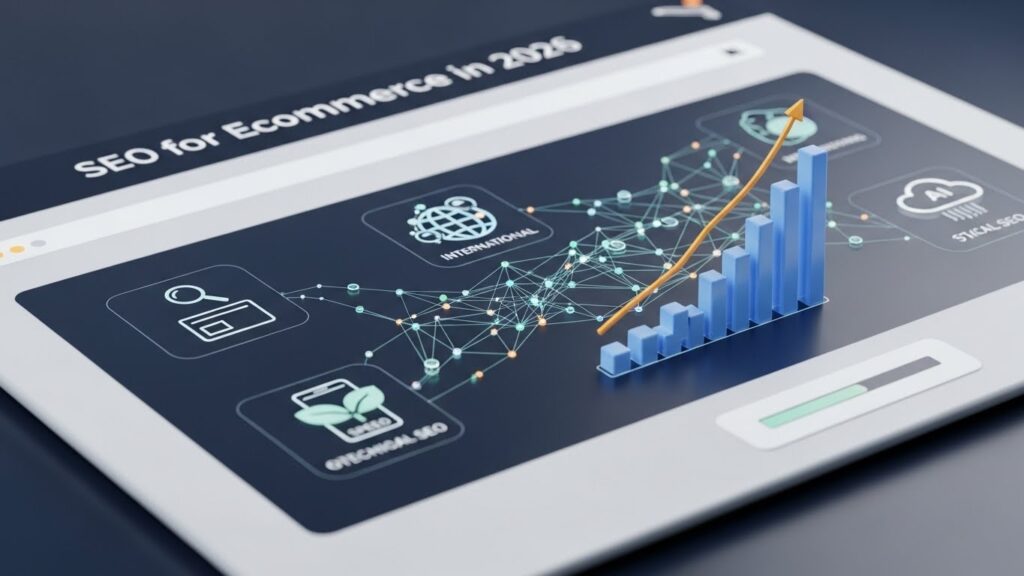
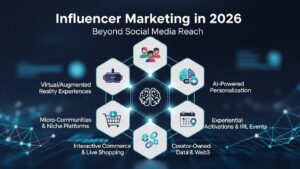
Nearly 60% of all Google searches now result in zero clicks. This dramatic shift in user behavior, which elevates the critical role of Influencer Marketing in 2026, is reshaping SEO for ecommerce, especially when it comes to how brands leverage influencers and visibility.
As AI-driven shoppers land on product pages at a significantly higher rate of 77% compared to Google’s 60%, we’re witnessing a fundamental transformation in discovery patterns. In fact, B2B brands have already seen homepage traffic increase by up to ten percent after the launch of AI summaries, while ecommerce sites experience lifts of around eight percent. This data clearly signals that traditional influencer strategies focused solely on social reach are becoming insufficient.
While TikTok’s engagement rate remains 30x higher than Instagram’s, the future of influencer marketing extends far beyond social metrics. Discovery is moving earlier in the funnel, with AI tools increasingly influencing product research, feature comparisons, and “best for” evaluations. However, Google’s AI Overviews are simultaneously pushing organic results down, creating new challenges for visibility.
In this article, we’ll explore how influencer marketing will evolve by 2026 and what strategies you need to implement now to stay ahead of these shifts.
Redefining influence in a fragmented digital world
The digital landscape has splintered into countless platforms, fundamentally changing what “influence” means for brands. Today’s consumers navigate between Instagram, TikTok, YouTube, and LinkedIn throughout their customer journey, making traditional single-channel influence strategies obsolete. This fragmentation requires brands to rethink their approach to influencer marketing in 2026 and beyond.
From social media to multi-channel presence
Modern audiences don’t confine themselves to a single platform. Instead, they engage with brands across multiple digital touchpoints simultaneously. This behavioral shift demands more sophisticated approaches than traditional social-only campaigns.
There’s a crucial distinction between multi-channel and omnichannel influencer strategies. While multi-channel involves separate campaigns across different platforms, omnichannel creates interconnected experiences where influencer content works synergistically across channels, a principle central to effective SEO for Ecommerce in 2026. The difference is substantial companies with strong omnichannel engagement retain 89% of their customers and see an average 9.5% yearly revenue increase.
Forward-thinking brands are already expanding influencer partnerships beyond social media. Rather than limiting collaborations to organic posts, they’re incorporating influencer content into their broader advertising strategy including TV commercials, billboards, and paid media. This comprehensive approach maintains a consistent brand presence that resonates with fragmented audiences.
Why brand alignment matters more than reach
Despite the importance of multi-channel presence, approximately one-third of marketers still prioritize “brand alignment” as their primary criterion for selecting influencers. Nevertheless, their definition of alignment often focuses too narrowly on demographics rather than deeper connections.
True brand alignment isn’t about an influencer’s age, location, or shopping habits it’s about their voice, values, and worldview matching the soul of your brand. This authentic connection builds trust, making the partnership more credible to audiences.
The data supports this approach: 63% of consumers repeatedly purchase based on an influencer’s recommendation, and 56% find it most authentic when creators share genuine first-hand experiences with products. Moreover, a small, niche influencer with a highly engaged community often drives more meaningful results than a larger influencer whose audience doesn’t closely align with your brand.
For lasting impact, brands must treat influencers as true partners rather than mere conduits to target audiences. This partnership mentality fosters better relationships and ultimately leads to superior performance.
Building trust through experience and authenticity
Trust has become the new currency in influencer marketing, with 79% of consumers basing purchasing decisions on user-generated content. As consumer skepticism grows, brands must move beyond traditional influence tactics to build authentic connections.
Leveraging user-generated content
Products featuring five or more reviews are 270% more likely to be purchased than those with none. This dramatic impact occurs because UGC serves as a powerful trust signal that transforms hesitant browsers into confident buyers. Furthermore, customer videos increase conversion rates by 80%, as consumers respond strongly to authentic demonstrations.
Many shoppers specifically seek visual validation before committing to purchase. In fact, 77% of consumers actively look for visual UGC before buying. Forward-thinking brands are responding by curating customer testimonials, photos, and video reviews directly on their websites, essentially turning their most satisfied customers into powerful advocates.
Collaborating with real product users
Micro and nano creators consistently deliver higher engagement rates and deeper community connections than their larger counterparts. Their recommendations are perceived as more honest because their audiences feel like communities rather than spectators. Consequently, brands should prioritize building relationships with smaller creators rather than investing everything in one macro influencer.
Always-on creator programs are replacing one-off campaigns, allowing brands to build long-term relationships that maintain momentum throughout the year. This approach strengthens loyalty and creates consistent content output, letting brands react quickly to cultural trends.
Embedding influencer reviews on product pages
According to research from CXL, social proof messaging can lift conversions by 15-20% when strategically integrated at key touchpoints. Brands can amplify this effect by embedding social media feeds on product pages and implementing dynamic social proof that taps into urgency and herd behavior.
Not all shoppers want to scroll through hundreds of reviews, so summarizing the “voice of the customer” speeds up decision-making. AI-powered highlights that identify most mentioned attributes help overcome objections at a glance, creating a frictionless path to purchase that aligns perfectly with ecommerce SEO strategies for 2026.

Optimizing influencer content for search and AI
As AI-powered search evolves, technical optimization of influencer content has become just as important as the content itself. With search engines increasingly relying on structured data to understand context, influencer marketing requires a more sophisticated technical approach for maximum visibility in 2026.
Using schema to structure influencer mentions
Schema markup provides a standardized format that helps search engines and AI systems interpret content on your webpage. This structured data tells search engines exactly what your content means, not just what it says. For influencer marketing, implementing schema markup significantly enhances data accuracy for algorithms, acting as a blueprint that defines format and meaning.
Key schema types for influencer content include:
- Review – For user-generated or editorial reviews
- Article – For blog-style influencer content
- VideoObject – For YouTube or embedded influencer videos
- Product – For individual product pages featuring influencer testimonials
Properly implemented schema markup increases your chances of being cited in AI-generated summaries, as structured data has become a key signal of authority and clarity in search results.
Creating content that answers real questions
To appear in AI search results, focus on creating what’s called “best answer content” – content that thoroughly addresses specific user queries. AI tools reference structured, clean content when parsing web results. In 2026, content that directly answers specific questions will outperform generic promotional material.
Voice search optimization will also be crucial, as it requires phrasing information as questions and using natural language that reflects how users speak. This approach aligns perfectly with how people interact with AI assistants.
Improving site speed and accessibility for AI parsing
For AI crawlers, technical performance matters tremendously. Fast-loading pages are easier to crawl and index. In fact, traditional UX optimization often focuses on human perception of speed, while for AI systems, the priority is different: fast access to clean, semantically structured HTML with minimal execution requirements.
Client-side rendering can be a major obstacle for AI systems that rely on automated browsers. Pre-rendering HTML snapshots for key pages provides a fast path for both LLMs and traditional crawlers, ensuring your influencer content gets properly indexed and cited.
Future-proofing your influencer strategy
In the rapidly shifting digital landscape of 2026, adaptability has become the cornerstone of successful influencer marketing. With an average social media user actively engaging across 6.8 different platforms monthly, single-channel strategies are increasingly risky and inefficient.
Diversifying platforms and content types
Relying exclusively on one platform creates dangerous vulnerabilities. Algorithm changes, regulatory challenges like potential TikTok bans, and shifting user preferences all threaten single-platform approaches. Smart brands are implementing multi-platform strategies that leverage each channel’s unique strengths using Twitch for real-time interaction, YouTube for in-depth content, Instagram for visual storytelling, and LinkedIn for thought leadership.
Integrating influencer marketing with SEO for ecommerce in 2026
Influencer collaborations now drive significant SEO value through high-quality backlinks and organic traffic that strengthen overall brand visibility. Rather than treating influencer content as isolated social posts, forward-thinking brands are repurposing this material across websites and marketing channels, creating an interconnected ecosystem that enhances both discovery and conversion.
Tracking dark traffic and AI-driven referrals
Dark social content shared via private channels like messaging apps and email now comprises 84% of all social sharing activity, yet remains invisible to standard analytics. This “dark traffic” often appears as direct traffic despite actually coming from influencer recommendations. Implementing UTM parameters, adding “how did you hear about us” prompts, and utilizing specialized tracking tools like GetSocial are essential for capturing this hidden value.
Adapting to evolving algorithms and formats
Algorithmic discovery has fundamentally changed how content reaches audiences. Only 33% of TikTok users follow specific creators, with most discovering content through personalized feeds. This shift demands content strategies focused on topics and conversations rather than follower counts. High-quality, engaging material that generates meaningful interactions is consistently prioritized by evolving algorithms, making authentic, value-driven content essential for long-term visibility.
Conclusion
As we look toward 2026, influencer marketing clearly extends far beyond follower counts and engagement rates. Throughout this exploration, we’ve seen how the convergence of AI-driven search, fragmented digital channels, and evolving consumer expectations demands a more sophisticated approach.
First and foremost, successful brands must embrace omnichannel strategies rather than single-platform campaigns. This approach requires treating influencers as true partners aligned with brand values, not merely content creators with large followings. Authenticity, after all, drives 63% of repeat purchases based on influencer recommendations.
Furthermore, technical optimization now plays an equally important role alongside creative content. Schema markup, structured data, and site speed directly impact whether your influencer content appears in AI-generated summaries or gets buried beneath them. These technical considerations, once afterthoughts, now determine visibility in an increasingly AI-mediated discovery landscape.
User-generated content similarly deserves your attention as a cornerstone of trust. Products with five or more reviews are 270% more likely to be purchased, while customer videos boost conversion rates by 80%. Therefore, your 2026 strategy should actively incorporate authentic customer voices across all touchpoints.
Undoubtedly, the path forward requires flexibility. Algorithms will continue evolving, platforms will rise and fall, and consumer behaviors will shift. Nevertheless, the fundamental principles of authentic connection, technical excellence, and platform diversification will remain essential regardless of these changes.
Ultimately, influencer marketing in 2026 will reward brands that think beyond social reach. Those who create genuine connections, optimize for both humans and AI, and build resilient multi-platform strategies will thrive in this new era of digital discovery. The future belongs to marketers who understand that influence isn’t measured in followers but in trust, alignment, and the ability to meet consumers wherever they are in their journey.
Frequently Asked Questions (FAQs)
1. What’s fundamentally different about influencer marketing in 2026 compared to just a few years ago?
The shift from vanity metrics to genuine influence. In 2026, brands have realized that a micro-influencer with 5,000 engaged followers who actually trust their recommendations can outperform a celebrity with 5 million passive followers. The focus has moved from reach and impressions to authentic community influence, conversion tracking, and long-term brand partnerships. Additionally, influencer marketing now extends far beyond Instagram posts, it includes podcast appearances, newsletter features, community platform engagement, AI-generated content collaborations, and even influencers as brand advisors or co-creators. The transactional “post and ghost” model has been replaced by strategic relationship building where influencers become integral to product development and brand storytelling.
2. How do I measure influencer marketing ROI when the impact goes beyond direct sales and clicks?
Implement multi-touch attribution that tracks the entire customer journey. Use unique discount codes and affiliate links for direct tracking, but also monitor brand search volume increases following campaigns, survey new customers about discovery sources, track assisted conversions in Google Analytics where influencer traffic appears in the conversion path, and measure share of voice in your industry conversations. Brand lift studies comparing awareness before and after campaigns provide qualitative data. In 2026, sophisticated brands use marketing mix modeling that weighs influencer contributions alongside other channels. The key is understanding that influencer marketing often creates top-of-funnel awareness that converts through other channels weeks or months later, so attribution windows must be longer than traditional digital ads.
3. Are mega-influencers and celebrities still worth the investment, or should I focus entirely on micro and nano-influencers?
It depends on your goals and stage of business growth. Mega-influencers and celebrities excel at mass awareness campaigns, brand credibility through association, and reaching entirely new audiences quickly. They’re valuable for product launches, rebranding efforts, or when entering new markets. However, micro-influencers typically deliver better engagement rates, higher trust, more affordable testing opportunities, and stronger niche targeting. The smartest 2026 strategy is a pyramid approach—one or two macro-influencers for reach and credibility at the top, supported by a network of 10-20 micro-influencers who drive actual conversions and community building. This balances awareness with authenticity and makes your budget work harder across different funnel stages.
4. How has AI and deepfake technology affected influencer marketing authenticity and trust?
AI has created both challenges and opportunities. The challenge is that audiences are increasingly skeptical about what’s real, making authentic, unscripted content more valuable than ever. Brands now benefit from influencers showing behind-the-scenes reality, imperfections, and genuine product experiences because it counters AI-polished perfection. The opportunity side includes AI-powered influencer discovery tools that match brands with genuinely aligned creators based on content analysis and audience psychographics, AI-generated performance predictions, and virtual influencers for specific controlled brand messaging. Interestingly, some brands are transparent about using AI influencers while others partner with human influencers who use AI tools for content enhancement. The winners in 2026 are those who clearly disclose their approach and maintain consistency in their authenticity standards.
5. What platforms beyond Instagram and TikTok should I be considering for influencer partnerships in 2026?
LinkedIn has exploded for B2B influencer marketing, with thought leaders driving genuine business leads. Podcasts offer deep engagement and trust-building that visual platforms can’t match. Email newsletters through platforms like Substack give influencers direct audience access without algorithm interference. Discord and community platforms allow influencers to facilitate ongoing conversations with highly engaged niche communities. Reddit’s community leaders and moderators wield significant influence in their subreddits. Even platforms like Spotify for playlist curators and YouTube for long-form educational content have distinct influencer ecosystems. The key insight is matching platform to your audience behavior—where do your customers actually spend time and consume content that influences their decisions?