
SEO for florists has become increasingly crucial in a digital landscape where organic search drives 51% of all website traffic, while social media contributes only 5%. Despite this opportunity, many flower shops struggle to adapt, highlighting the need for a focus on SEO for AI Answers as AI transforms how people find businesses online.
The U.S. floral industry is projected to generate approximately $8.9 billion in revenue by 2025. However, with over 41,000 florists competing across the country, standing out requires more than beautiful arrangements. Local SEO for florists is particularly important because potential customers actively search for nearby flower shops when planning weddings, special events, or seeking daily arrangements.
When someone searches for “wedding florist near me” or “flower delivery service” but doesn’t find your business, you’re missing valuable opportunities. This challenge grows as search engines increasingly provide direct answers to queries without users clicking through to websites.
In this guide, I’ll share strategies to help your flower business thrive in this evolving search environment. We’ll explore how to optimize your online presence for visibility even when customers don’t click, ensuring your floral business blooms in the digital age.

How AI is Changing Search Behavior
The search landscape is undergoing a fundamental shift as AI transforms how users find information online. Search behavior that once centered around clicking through multiple results has now evolved into a streamlined experience where answers appear directly on search pages.
Fewer clicks, more direct answers
AI-powered search engines are rapidly changing how users interact with search results, a transformation with direct implications for SEO for Florists. Instead of requiring users to visit websites for answers, search engines now deliver information directly within the results page. About 50% of Google searches already feature AI summaries, a figure projected to rise to more than 75% by 2028. Furthermore, these AI-generated answers are becoming increasingly sophisticated, synthesizing information from multiple sources into comprehensive responses that satisfy user queries without requiring additional context.
The rise of zero-click searches
Zero-click searches where users get answers without visiting any websites are becoming the norm. In 2024, approximately 58.5% of U.S. searches and 59.7% of European searches ended without a click. A Pew Research study found that Google users encountering AI Overviews clicked on links only 8% of the time, compared to 15% for those without AI summaries. Additionally, users were more likely to end their search sessions after seeing an AI Overview (26% vs. 16% without). For florists relying on organic search traffic, this presents a significant challenge as potential customers may find basic information without ever visiting your website.
What this means for traditional SEO
Traditional SEO focused primarily on driving clicks to websites, but AI search is shifting the paradigm toward visibility within AI-generated responses. In fact, 44% of AI-powered search users say it’s their primary and preferred source of insight. Consequently, the traditional focus on keyword rankings and click-through rates is becoming less effective. For local businesses like florists, this means adapting strategies to ensure your information appears within these direct answers.
Given that only 1% of users click on cited links within AI summaries, florists must optimize not just for rankings but for inclusion in AI-generated content. This requires a shift from search engine optimization (SEO) to what some experts call generative AI engine optimization (GEO). As a result, local SEO for florists must now focus on structured data and authoritative content that AI systems can easily extract and present.
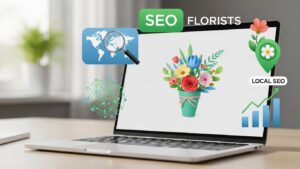
Optimizing for Visibility Without Clicks
With zero-click searches dominating today’s search landscape, florists need to focus on visibility even when users don’t visit their website. Indeed, visibility (impressions) is becoming the new benchmark for SEO success.
Using structured data and schema markup
Structured data tells search engines exactly what your content means, making your flower shop more visible in AI-generated results. For florists, implementing these schema types is essential:
- LocalBusiness schema: Helps populate knowledge panels with your shop’s address, hours, and services
- FAQPage schema: Increases chances of appearing in People Also Ask boxes and AI Overviews
- HowTo schema: Ideal for wedding arrangement tutorials or care instructions
Adding schema markup can lead to impressive results sites with structured data have seen up to 25% higher click-through rates and users spending 1.5x more time on schema-implemented pages.
Optimizing for featured snippets
Featured snippets appear at position zero and capture approximately 8% of all clicks. To optimize your floral content:
Start with “What is…” headings followed by concise definitions. Structure your flower care guides with clear steps using ordered lists. For competitive floral services, create comparison tables that Google can easily extract.
Leveraging Google Business Profiles
Your Google Business Profile significantly impacts local visibility. Complete profiles are more likely to appear in local search results even when customers don’t click through. Maintain accuracy in all details including hours, services, and flower delivery options.
Responding to reviews shows you value customer feedback, which helps your flower shop stand out. Additionally, selecting the right primary category is crucial one HVAC company dropped from #1 to #31 after changing their category.
Creating content that answers questions directly
Format your floral content with direct answers in the first 40-60 words of each page. Use definitional-style writing that clearly states “Flower preservation is…” before elaborating. This approach helps both AI systems and readers quickly understand your expertise.
Remember that AI prioritizes clarity over storytelling, so structure your florist website content with clean, logical sections that AI crawlers can easily extract for summaries.
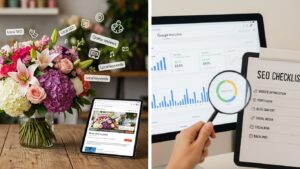
Content Strategies That Still Drive Engagement
Even as AI changes search results, strategic content creation remains vital for florists seeking meaningful engagement. Specific approaches can still capture attention and drive website visits.
Creating content clusters around core topics
Organizing interconnected content around pillar pages demonstrates expertise to search engines. This approach establishes your flower shop as an authority on topics like “wedding arrangements” or “seasonal blooms.” Content clusters strengthen topical authority, making your website a comprehensive resource that search engines recognize.
Using long-tail keywords with intent
Long-tail keywords drive high-quality traffic despite lower search volumes. These specific phrases communicate clear customer needs someone searching “same-day lily delivery for anniversaries” shows higher purchase intent than someone searching “flowers”. Notably, 91.8% of all search queries are long-tail keywords, with those 3+ words long generating 77.91% of organic conversions.
Incorporating visuals and video for better retention
Posts with images see a 94% increase in readership compared to text-only formats. Moreover, pages featuring video content are 53 times more likely to rank on Google’s first page. High-quality, relevant images near appropriate text help Google understand context better.
Blogging with local SEO in mind
Creating hyperlocal content helps florists target location-specific keywords. Writing about local events or seasonal flower trends naturally incorporates phrases like “[flower type] + [your location]”.
Encouraging user interaction and dwell time
Increasing dwell time signals search engines that your content provides value. Interactive elements like polls and quizzes boost engagement, subsequently increasing dwell time by up to 2.6 times.

Technical SEO and On-Site Enhancements
Technical aspects of your website directly impact how AI systems evaluate and display your florist business. According to research, sites with Core Web Vitals scores within threshold ranges are 29.8% more likely to appear in AI-generated summaries.
Improving page speed and mobile usability
Site speed is no longer just about user experience it’s a qualifier for AI visibility. Pages delivering content in under 2.5 seconds are 1.47 times more likely to appear in AI outputs. Since Google uses mobile-first indexing, optimizing for smartphones is essential heavy JavaScript can prevent some crawlers from accessing your content properly.
Optimizing image alt text and file names
Name image files descriptively (like “wedding-bouquet-roses.jpg” instead of “IMG_1234.jpg”). Well-crafted alt text serves both accessibility and SEO purposes by accurately describing images while naturally incorporating relevant keywords.
Internal linking to boost page authority
Strategic internal linking distributes authority throughout your site. Your homepage typically carries the highest link value since it earns the most backlinks. By linking from high-authority pages to newer content, you pass SEO strength where needed most.
Using analytics to track zero-click performance
Track zero-click performance through Google Search Console’s impressions metric. For deeper insights, use GA4’s attribution reports to measure assisted conversions from search visibility even without direct clicks.

Conclusion
As search engines continue to evolve with AI technology, adapting your florist SEO strategy becomes essential rather than optional. Throughout this guide, we’ve explored how the traditional click-focused approach no longer fully serves businesses when nearly 60% of searches end without website visits.
Success now depends primarily on visibility within AI-generated answers. Structured data acts as your digital translator, helping search engines understand exactly what your flower shop offers. Featured snippets and complete Google Business Profiles similarly extend your reach even when customers don’t click through to your website.
Beyond these technical elements, content still matters tremendously. Content clusters establish your authority while long-tail keywords connect you with customers showing clear purchase intent. Visual elements and local SEO blogging further strengthen your digital presence, giving you multiple opportunities to appear in search results.
Technical factors certainly play their part too. Fast-loading pages optimized for mobile devices signal quality to both users and AI systems. Proper image optimization and strategic internal linking distribute authority throughout your site, maximizing visibility for all your pages.
This new search landscape might initially seem challenging for florists accustomed to traditional SEO metrics. Nevertheless, businesses that embrace these changes gain significant advantages over competitors still focused solely on rankings and click-through rates.
Remember, visibility now carries more weight than clicks alone. Your flower shop can thrive in this AI-driven search environment by implementing the strategies we’ve discussed. Start small with one or two approaches, measure your results, then gradually expand your efforts. The florists who adapt their SEO strategies today will be the ones who continue blooming digitally tomorrow.
Frequently Asked Questions (FAQs)
1. If AI tools like ChatGPT and Google’s AI Overviews answer questions directly, why should I even bother with SEO anymore?
Because visibility still matters, even when clicks decrease. When AI tools cite or reference your content, you’re building brand authority and trust with users who see your name repeatedly. This creates a “mere exposure effect” where people become familiar with your brand before they ever visit your site. Additionally, AI answers often provide partial information, and users with deeper needs will still seek out comprehensive resources. Your SEO strategy should shift from pure traffic generation to becoming the authoritative source that AI models trust and cite essentially, you’re optimizing for AI consumption and human decision-making simultaneously.
2. How do AI models like ChatGPT and Google’s Gemini actually decide which sources to cite or reference in their answers?
AI models prioritize sources based on several factors: content authority and credibility, recency of information, clarity and structure of the content, alignment with user intent, and how frequently a source appears in their training data or retrieval systems. For real-time AI like Google’s AI Overviews, they pull from top-ranking pages that demonstrate E-E-A-T signals. The key insight is that AI models favor content that’s well-organized, factually accurate, and comes from domains with established authority. This means traditional SEO fundamentals quality content, authoritative backlinks, clear structure matter more than ever because they influence what AI considers trustworthy.
3. What’s the biggest mistake websites are making in preparing for zero-click searches and AI-generated answers?
Treating zero-click as a problem to fight rather than an opportunity to adapt. Many sites are trying to hide content behind paywalls or use technical barriers to prevent AI scraping, which often backfires by reducing overall visibility. The bigger mistake is creating content that only makes sense in a full-article context rather than producing modular, citation-worthy insights that AI can extract and attribute. Winners in this era create content designed to be referenced clear statistics, unique perspectives, quotable expert opinions, and proprietary data that AI models must cite to maintain credibility.
4. Can I actually measure success if people aren’t clicking through to my website anymore?
Absolutely, but you need new metrics beyond traditional traffic and conversions. Focus on brand search volume increases, which indicate growing awareness even without direct traffic. Monitor “impressions” in Search Console to see how often you appear in searches. Track citation frequency in AI-generated answers using tools that monitor AI platforms. Measure brand mention volume across the web. Survey your customers about how they discovered you many will say they saw your name multiple times before visiting. Success in the AI age means influence and visibility, which eventually convert through indirect pathways rather than immediate clicks.
5. Should I be creating different content specifically for AI consumption versus human readers?
Not entirely different content, but you should layer your content strategy. Create comprehensive, human-friendly long-form articles that satisfy deep intent, but embed within them clear, extractable insights that AI can cite think data points, expert quotes, step-by-step processes, and definitional content. Use structured data markup to help AI understand your content’s organization. Include clear attribution and sourcing for your own claims, as AI models prefer citing sources that demonstrate journalistic rigor. The goal is content that serves both audiences: engaging narratives for humans and cleanly structured information for AI parsing.