SEO for tourism has never been more critical, with a staggering 69% of all tourism and travel sales worldwide made online in 2023, a competitive landscape where understanding Why Brand Mentions Matter More Than Backlinks becomes essential. In fact, research shows that 9 out of 10 tourists conduct online research before traveling, and approximately 82% complete their bookings digitally..
While traditional backlinks have long been the gold standard for improving search rankings, we’re witnessing a significant shift in how search engines evaluate tourism websites. As SEO for tourism companies evolves, brand mentions are increasingly carrying more weight than conventional link building. Additionally, 88% of travelers trust online reviews as much as personal recommendations, highlighting how unlinked mentions can profoundly impact your business visibility.
In this article, I’ll explore why brand mentions are overtaking backlinks in modern SEO, how search engines are adapting to recognize these unlinked citations, and what strategies you can implement to capitalize on this evolution. Whether you’re struggling to improve your rankings or looking to stay ahead of the curve, understanding this shift is essential for your tourism business’s online success.

What are brand mentions and how do they differ from backlinks?
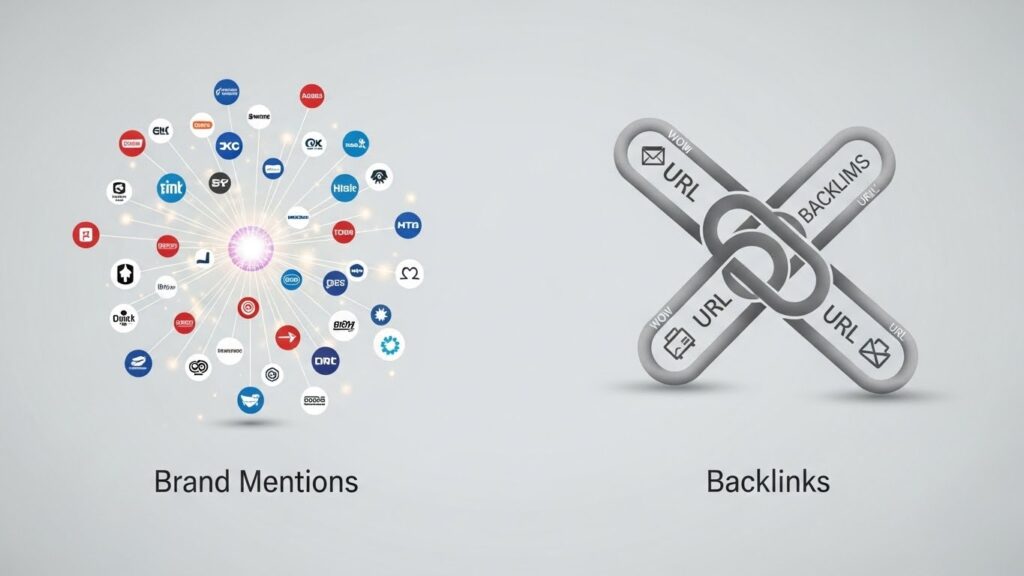
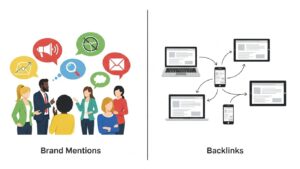
Brand mentions have become a powerful force in the digital landscape. Brand mentions are any references to your company, product, or service that appear online regardless of whether they link to your website. These can occur in blog posts, news articles, review sites, social media, or even podcasts.
Definition of brand mentions
Brand mentions come in three distinct forms. Linked mentions include a clickable URL to your site, acting as a direct pathway for visitors. Unlinked mentions feature your brand name in plain text without a hyperlink. Implied mentions occur when someone references your brand without explicitly naming it, such as describing your distinctive product features or services. From an SEO standpoint, Google treats these mentions as “implied links,” strengthening your brand’s credibility even without physical backlinks.
How backlinks work in traditional SEO
Conversely, backlinks have historically been the cornerstone of search engine optimization. These hyperlinks from external websites to yours function as digital votes of confidence. Search engines interpret these links as endorsements, passing “link juice” that boosts your domain authority. Essentially, each quality backlink signals to Google that your content deserves attention. Throughout the evolution of search algorithms, backlinks have remained among the strongest ranking factors, with higher-quality connections yielding greater ranking improvements.
Key differences between mentions and links
The distinction between these two elements is significant. First, backlinks always include a clickable URL, whereas brand mentions may or may not. Second, backlinks directly drive referral traffic, yet mentions primarily build awareness and recognition. Furthermore, backlinks have an immediate impact on rankings through direct authority transfer, whereas mentions influence rankings more subtly by establishing brand relevance and trustworthiness.
However, both elements serve valuable purposes for tourism companies. Brand mentions build widespread recognition across multiple platforms, creating a foundation of credibility that modern search engines increasingly recognize. Meanwhile, backlinks continue to provide direct ranking benefits through established algorithmic weight. The strongest SEO for tourism strategies incorporate both approaches rather than treating them as competing tactics.

Why brand mentions are gaining more SEO value
Search engines have evolved dramatically in recent years, fundamentally changing the role of brand mentions in digital marketing. Increasingly, tourism businesses are discovering that unlinked mentions contribute significantly to online visibility.
Google’s evolving algorithm and E-E-A-T
Since late 2022, Google expanded its quality framework to E-E-A-T (Experience, Expertise, Authoritativeness, and Trustworthiness), placing greater emphasis on brands consistently mentioned across the web. This updated framework determines whether Google’s AI systems reference your tourism content as a credible source, directly influencing visibility in search results. Currently, broad core updates specifically reward tourism websites demonstrating these strong signals, particularly businesses with proven experience in the travel sector.
The rise of unlinked brand citations
The SEO landscape has shifted from being strictly link-based to more entity-based. Instead of focusing solely on who links to your tourism website, search engines now evaluate who you are as a brand entity, where you’re mentioned online, and whether those mentions appear in trustworthy contexts. Studies show that AI-powered search engines like ChatGPT cite pages ranked 21+ nearly 90% of the time, often prioritizing trusted brands over traditional ranking signals. Remarkably, the average domain overlap between AI Mode and traditional organic results can be under 50%, highlighting how modern algorithms increasingly value brand signals over link metrics.
How mentions build trust and authority
For tourism companies, consistent brand mentions function as digital word-of-mouth. When your brand appears regularly in travel publications, review sites, and industry discussions, it creates a powerful trust signal. According to research, 61% of AI mentions about corporate reputation come from earned media. Moreover, positive sentiment across the web and consistent messaging are now significant ranking factors. This explains why tourism brands mentioned repeatedly in relevant contexts – even without links – often achieve stronger search visibility than competitors with more backlinks but fewer brand citations.
How search engines interpret brand mentions
Behind every search result lies a complex system that determines how tourism brands appear online. Understanding these mechanisms gives tourism companies a distinct advantage in modern SEO.
Entity recognition and semantic relevance
Search engines use Named Entity Recognition (NER) to identify and classify tourism brands within text, regardless of whether links exist. This process transforms unstructured content into structured data that algorithms can interpret. When your tourism business is mentioned across multiple trusted sources, the entity embedding strengthens, creating tighter connections between your brand and related industry concepts.
Entity linking further refines this process by mapping each mention to a canonical entity ID in knowledge databases. This resolves ambiguities (like “Paris” the city versus a person), merges variants of your brand name, and ties your tourism content to the web’s shared knowledge graph. Notably, 86% of AI citations come from sources brands already control primarily websites (44%) and business listings (42%).
The role of context and sentiment
Context plays a decisive role in how search engines interpret brand mentions. Natural Language Processing helps search engines understand not just that your tourism brand was mentioned, but how it was referenced. The algorithms analyze sentiment (positive/negative), surrounding content, and topical relevance to determine the value of each mention.
This contextual understanding explains why mentions in expert tourism roundups or positive reviews carry more weight than random references. Search engines evaluate whether your brand appears in discussions about relevant tourism categories, destination information, or customer experiences all without requiring links.
Mentions in structured vs unstructured data
The format of your brand mentions impacts their SEO value. Structured data provides explicit organization through schema markup, making it easier for search engines to categorize information about your tourism offerings. Alternatively, unstructured data like social media posts, forum discussions, and news articles requires more sophisticated processing but represents most brand mentions online.
For tourism companies, this distinction matters because AI search systems now prioritize brands that appear consistently across both formats, with ChatGPT mentioning brands in 99.3% of e-commerce responses compared to Google AI Overview’s mere 6.2%.
Strategies to earn high-quality brand mentions
Earning high-quality brand mentions requires strategic effort beyond traditional link building tactics. First and foremost, these mentions work as powerful trust signals for tourism businesses looking to establish market authority.
Create shareable and newsworthy content
Creating content worth talking about starts with originality. When you produce thought leadership pieces, research studies, or unique perspectives on tourism trends, you give others a reason to reference your brand. Visual content performs exceptionally well, with videos and infographics breaking down information in ways that encourage sharing.
Leverage PR and media outreach
Digital PR helps tourism companies secure valuable brand mentions in high-authority outlets. Sign up for platforms like HARO (Help A Reporter Out) or Featured.com to connect with journalists seeking expert sources. Responding quickly with concise, quotable insights makes your brand more likely to be featured, even without backlinks.
Engage in community and industry discussions
Be present wherever your industry is being discussed. Active participation in forums like Reddit and Quora is especially important as these sites are frequently referenced by AI tools. Throughout these discussions, focus on providing value rather than self-promotion.
Use social media to amplify brand visibility
Develop a “community flywheel” by encouraging user-generated content over 75% of content about successful brands comes directly from users. Creating branded hashtag challenges can effectively increase engagement and organic mentions.
Collaborate with influencers and partners
Partner with complementary tourism brands or micro-influencers whose audiences align with your target market. These collaborations often yield higher engagement rates than celebrity partnerships, with micro-influencers generating up to five times more engagement.
Conclusion
The evolution of SEO for tourism businesses clearly demonstrates a significant shift toward brand mentions as critical ranking factors. Though backlinks still matter, unlinked citations now carry substantial weight in how search engines evaluate your tourism brand’s authority and relevance. This change reflects Google’s broader move toward entity-based search through the E-E-A-T framework, where consistent mentions across trusted platforms build stronger credibility than isolated backlinks.
Brand mentions essentially function as digital word-of-mouth for your tourism business. Search engines now recognize these references through sophisticated entity recognition and contextual analysis, regardless of whether they contain actual links. Consequently, tourism companies must adapt their strategies to focus not just on acquiring backlinks but also on generating valuable conversations about their brands.
Most importantly, this evolution offers new opportunities for tourism businesses previously struggling with traditional link building. Your brand can now gain visibility through multiple channels – from expert roundups and review sites to social media discussions and industry forums. After all, each quality mention strengthens your brand’s entity within search algorithms.
The future of SEO undoubtedly belongs to businesses that balance both approaches. Rather than viewing this as an either/or situation, smart tourism marketers will pursue comprehensive strategies that generate both quality backlinks and widespread brand mentions. Therefore, your focus should extend beyond mere link acquisition to creating genuinely shareable content, building industry relationships, and participating actively in relevant communities.
Success in modern SEO ultimately depends on becoming a recognized authority in your tourism niche. When travelers and industry experts naturally reference your brand across the web, search engines increasingly recognize this as a powerful signal of your relevance and trustworthiness. While this approach requires patience and consistent effort, the long-term benefits for your tourism business will certainly outweigh the initial investment.
Frequently Asked Questions (FAQs)
1. What exactly is a brand mention and how is it different from a backlink?
A brand mention is when your company name, product, or brand is referenced on another website without including a clickable hyperlink back to your site. For example, if a tech blog writes “Apple released new features” without linking to Apple’s website, that’s a brand mention. A backlink, on the other hand, is a clickable hyperlink that directs users to your site. The key difference is that brand mentions show Google your brand is being discussed and recognized even when people don’t formally link to you, which signals authentic brand awareness rather than just SEO tactics.
2. Can Google actually track unlinked brand mentions, and if so, how does it use that information?
Yes, Google can absolutely track unlinked mentions through its natural language processing and entity recognition technology. Google crawls and indexes text content across the web, identifying when brands are mentioned in context. It uses this data to understand brand sentiment, popularity, and authority within specific industries. When your brand appears frequently alongside industry keywords or is mentioned by authoritative sources, Google interprets this as a trust signal. This feeds into Google’s Knowledge Graph and influences how your brand entity is understood and ranked in search results.
3. If brand mentions are so valuable, why do most SEO agencies still obsess over backlink counts?
Backlinks are easier to measure, track, and report to clients. Tools like Ahrefs and Moz provide clear metrics showing backlink growth, making it simple to demonstrate ROI. Brand mentions, however, are harder to quantify and attribute directly to ranking improvements. Many agencies stick with what’s familiar and measurable. Additionally, backlinks still do carry weight, especially for new websites without established brand recognition. The reality is that brand mentions work best for companies that already have some level of brand awareness, while newer sites need the direct authority transfer that backlinks provide.
4. Do negative brand mentions hurt my SEO, or does Google only care about the volume of mentions?
Google’s algorithms are sophisticated enough to analyze sentiment, so negative mentions can impact your SEO, though not always directly through rankings. Consistent negative mentions across reputable sites can harm your brand’s E-E-A-T signals and reduce click-through rates when people search for you. However, the impact depends on context product reviews mentioning issues while still recommending you are different from widespread scandal coverage. The good news is that Google tends to prioritize official responses and authoritative sources, so reputation management and responding to criticism can mitigate negative effects.
5. How many brand mentions do I need before they actually start influencing my search rankings?
There’s no magic number, but consistency and quality matter more than raw volume. A brand mentioned in 10 authoritative industry publications will outperform one mentioned 100 times in low-quality directories. For small businesses, even 5-10 quality mentions per month in relevant contexts can begin signaling authority to Google. The pattern matters too steady mentions over time are better than a sudden spike that looks manipulative. You’ll typically start seeing impact when your brand is mentioned naturally alongside your target keywords and competitor brands in industry discussions.
6. Can I actively build brand mentions the same way people build backlinks, or does that defeat the purpose?
You can and should actively work to earn brand mentions, but the approach differs from traditional link building. Effective strategies include earning press coverage through PR campaigns, creating newsworthy content or research that journalists cite, speaking at industry events that get covered, participating in expert roundups, and building relationships with influencers who discuss your industry. The key is creating genuine reasons for people to mention you rather than paying for placements or using manipulative tactics. Google can detect patterns suggesting artificial mention building, so authenticity remains crucial.
7. What happens if my brand name is a common word or phrase, does that confuse Google’s tracking?
This presents challenges but isn’t insurmountable. Google uses entity disambiguation to understand context and separate brand mentions from common word usage. If your company is named “Apple,” Google knows the difference between fruit discussions and tech conversations based on surrounding context, co-mentioned entities, and the website’s typical topics. However, having a distinctive brand name is definitely easier for SEO. If your brand name is common, you can help Google by maintaining consistent NAP information, claiming your Knowledge Panel, and building strong entity associations through structured data and consistent brand messaging across platforms.
8. Are brand mentions on social media as valuable as mentions on traditional websites and blogs?
Social media mentions have different but complementary value. While Google doesn’t directly count social signals as traditional ranking factors, social mentions contribute to overall brand visibility, drive traffic, and often lead to earned media coverage that Google does track. Twitter/X mentions from industry influencers, LinkedIn discussions, and viral content can trigger traditional media coverage. Social mentions also influence your brand’s Knowledge Graph and how Google understands your entity relationships. Think of social as the spark that ignites traditional mentions rather than a direct ranking factor itself.
9. If I rebrand or change my company name, do I lose all the SEO value from previous brand mentions?
You don’t lose everything, but you do face challenges during the transition. Google’s entity understanding can connect your old and new brand names if you manage the rebrand properly. Key strategies include announcing the rebrand publicly on authoritative sites, using structured data to indicate the name change, maintaining redirects from old to new domains, updating all official profiles simultaneously, and reaching out to sites with prominent mentions to request updates. The entity signals you built don’t disappear overnight, but consistent use of your new name is necessary to transfer that authority. Expect a 3-6 month transition period.
10. In practical terms, what’s the single most effective way to start earning quality brand mentions starting today?
Create original research or data studies in your industry. Journalists and bloggers desperately need credible data to cite in their articles, and when you become a source of unique insights, mentions follow naturally. This could be an annual industry report, survey results from your customer base, or analysis of trends using proprietary data. Publish it freely, make it easy to reference with clear statistics and quotes, then personally reach out to journalists who cover your industry. This approach generates both brand mentions and backlinks simultaneously while positioning you as a thought leader. It’s the highest ROI activity for building modern SEO authority.